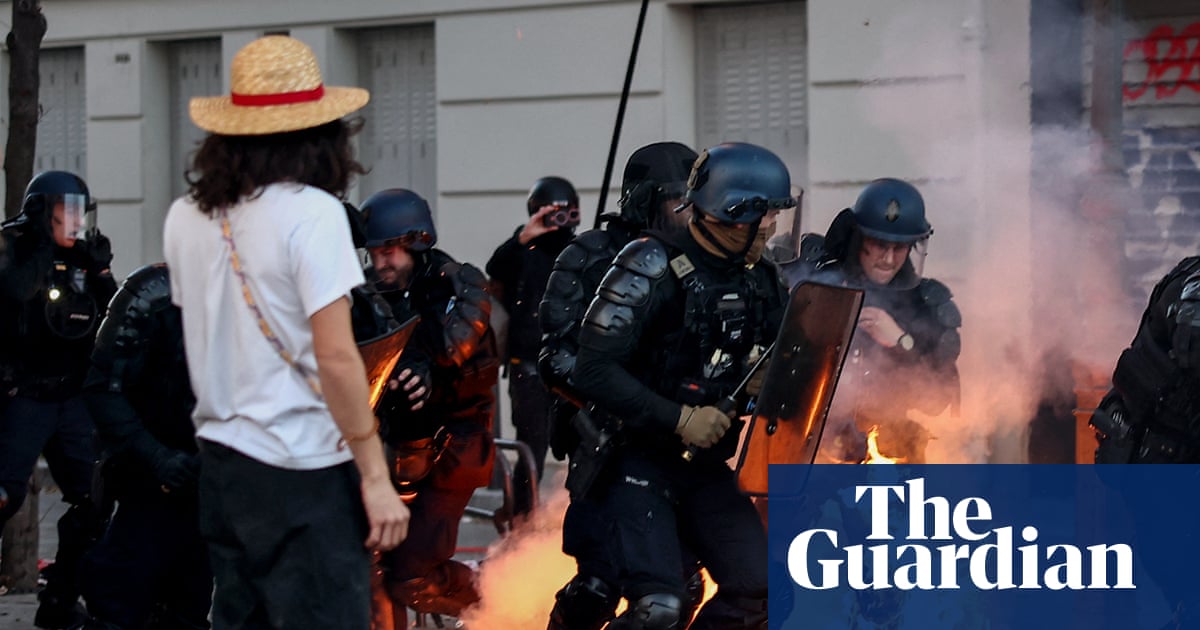
Across Europe, a wave of youth-led protests demanding better education, affordable housing, and improved public services has taken a violent turn. What began as peaceful demonstrations has escalated into clashes with law enforcement, raising questions about the limits of protest and the role of police in maintaining order.
France: Petrol Bombs and Arrests
In France, protests over the high cost of living and deteriorating public services drew an estimated 320,000 demonstrators to the streets. As the rallies ended, masked rioters caused widespread violence, leading to the arrest of over 770 people. A shocking incident in Paris saw incendiary devices thrown at a group of gendarmes and police officers, resulting in second-degree burns. The prosecutor’s office has opened an investigation into attempted murder.
Germany: Looting and Riots
In Germany, protests led by the “Gen Z regelt” campaign demanding better education and lower living costs turned violent in Frankfurt. Hooded rioters damaged and looted shops, throwing petrol bombs and injuring over 100 police officers. German authorities have vowed to hold the perpetrators accountable, with Interior Minister Alexander Dobrindt calling for tough penalties.
Portugal, Switzerland, and Beyond
Similar scenes unfolded in Portugal, where riot police used force to clear protest camps in Lisbon and Porto. In Switzerland, unauthorized demonstrations in Zürich and Basel ended with police deploying water cannons, tear gas, and rubber bullets against rioters. Violence also erupted in Albania, where protesters demanding the resignation of Prime Minister Edi Rama hurled stones and firebombs at police.
The Debate Over Protest and Policing
The escalating violence has sparked a heated debate about the nature of protest and the role of law enforcement. While many condemn the use of violence by protesters, others argue that it is a response to perceived police brutality and government inaction. As one observer noted, “The police need to defend themselves, but most of the time they are the aggressor.”
The situation highlights the challenges of balancing the right to protest with the need for public safety. As tensions continue to rise, the question remains: can Europe’s governments address the underlying grievances before the cycle of violence escalates further?


